
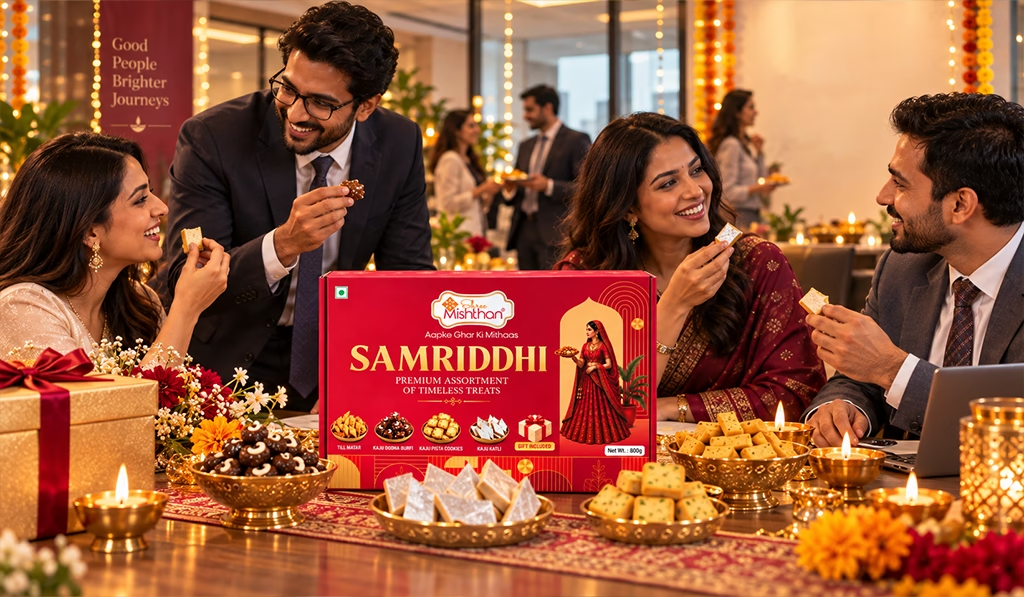
Indian sweets are more than desserts. They are an important part of celebrations, family traditions, religious ceremonies, weddings, festivals, and everyday moments of happiness. From soft and juicy gulab jamun to rich kaju katli, creamy rasmalai, and aromatic motichoor laddoo, every Indian sweet carries a unique story of culture, craftsmanship, and flavour.
However, creating authentic Indian sweets is not simply about following a recipe. The real secret lies in the perfect combination of high-quality ingredients, traditional preparation methods, skilled craftsmanship, consistency, and an understanding of taste.
Authentic Indian sweets are created with patience and precision. Every ingredient is carefully selected, every stage of preparation is monitored, and every product is made to deliver the familiar taste that customers know and love.
Quality Ingredients Create Exceptional Sweets
The foundation of every delicious Indian sweet is the quality of its ingredients. Even the most traditional recipe cannot deliver outstanding results when prepared with poor-quality raw materials.
Milk, khoya, paneer, ghee, sugar, flour, dry fruits, saffron, cardamom, and nuts are commonly used in Indian mithai. The freshness and purity of these ingredients directly affect the final taste, aroma, colour, and texture.
For example, good-quality milk gives rasmalai its creamy richness, while fresh paneer helps create soft and spongy rasgullas. Pure ghee adds a deep aroma and smooth finish to laddoos and halwa. Premium cashews are essential for making rich and silky kaju katli.
Using fresh ingredients also improves the shelf life and overall stability of sweets. It helps maintain their flavour without relying excessively on artificial colours, flavours, or preservatives.
This is why trusted sweet manufacturers and traditional halwais pay close attention to sourcing. They understand that authentic taste begins long before the cooking process starts.
Traditional Recipes Preserve Authentic Flavour
Indian sweet-making recipes have often been passed down through generations. These recipes are not just written instructions. They include years of experience, observations, techniques, and small details that cannot always be measured.
A traditional sweet maker understands how long milk should be reduced, when sugar syrup has reached the correct consistency, how hot the ghee should be, and when the mixture is ready for shaping.
These techniques play an important role in producing the right texture and flavour.
A sugar syrup that is too thin may make a sweet soggy, while an overly thick syrup can prevent it from absorbing properly. Khoya cooked for too long may become dry, while undercooked khoya can affect both taste and shelf life.
Traditional preparation methods protect the original identity of Indian sweets. While modern machinery can support large-scale production, the recipe and process must remain true to the product.
Authenticity does not mean avoiding technology. It means using technology carefully without compromising traditional taste.
The Importance of Skilled Craftsmanship
Indian sweet-making is both a science and an art. Measurements, temperature, timing, and ingredient proportions provide the scientific foundation. Experience, judgement, shaping, and presentation bring in the artistic element.
An experienced sweet maker can identify the correct texture by touch, understand syrup consistency by looking at its flow, and determine whether a mixture is ready through aroma and appearance.
This expertise is particularly important when preparing sweets in large quantities. A recipe that works for a small batch may behave differently when produced at a commercial scale. Ingredient temperatures, cooking time, mixing speed, and environmental conditions can influence the final product.
Skilled professionals understand how to manage these changes while maintaining consistency.
Their knowledge ensures that every batch has the same sweetness, softness, colour, aroma, and appearance. This is one of the biggest secrets behind reliable and authentic Indian sweets.
Taste Is About Balance
A good Indian sweet should be rich, flavourful, and satisfying, but it should not overwhelm the taste buds. Authentic mithai is about balance.
Sweetness is important, but it should complement the flavours of milk, ghee, nuts, cardamom, saffron, rose, or other ingredients. When a sweet contains too much sugar, the natural flavour of the main ingredients gets hidden.
Texture must also be balanced.
Gulab jamun should be soft and evenly soaked without becoming mushy. Rasgulla should be spongy and juicy without feeling rubbery. Kaju katli should be smooth and melt gently in the mouth. Laddoos should hold their shape while remaining soft enough to bite comfortably.
Aroma also contributes to taste. Freshly ground cardamom, saffron strands, rose water, and pure ghee create a sensory experience even before the first bite.
Authentic taste is achieved when sweetness, texture, aroma, richness, and freshness come together naturally.
Slow Cooking Develops Richness
Many traditional Indian sweets require slow cooking. Milk-based sweets, in particular, develop their distinctive flavour through gradual reduction and careful stirring.
Slow cooking allows moisture to evaporate while concentrating the natural sweetness and richness of milk. It also helps develop a deeper aroma and smoother texture.
Products such as rabri, peda, kalakand, and milk cake depend heavily on this process. Rushing the cooking stage may save time, but it often produces a flat flavour or uneven texture.
Similarly, roasting ingredients such as gram flour, semolina, or wheat flour requires patience. Proper roasting releases aroma, removes rawness, and gives sweets their characteristic golden colour.
The difference between an average sweet and an exceptional one often comes down to a few extra minutes of careful cooking.
Traditional sweet makers understand that flavour cannot always be hurried.
Hygiene and Food Safety Matter
Authenticity must always be supported by hygiene and food safety. Customers expect traditional taste, but they also expect sweets to be prepared, packed, stored, and transported safely.
Clean production areas, hygienic equipment, controlled temperatures, safe water, proper storage, and trained staff are essential for maintaining product quality.
Milk-based sweets are especially sensitive and must be handled carefully. Poor temperature management can affect freshness, taste, and safety.
Modern sweet manufacturers often combine traditional recipes with systematic hygiene practices. Batch monitoring, ingredient inspection, quality testing, and controlled packaging help reduce variations and protect the product.
This combination allows businesses to offer the warmth of traditional mithai with the reliability expected from a professional food brand.
Consistency Builds Customer Trust
Customers return to a sweet shop or brand when they know what to expect. They want their favourite sweet to taste the same every time they purchase it.
Consistency is one of the most challenging parts of sweet production because ingredients can naturally vary. The quality of milk, moisture in flour, size of dry fruits, temperature, and humidity may all influence the preparation process.
Maintaining consistency requires standardised recipes, experienced staff, accurate measurements, regular quality checks, and controlled cooking conditions.
Appearance must also remain consistent. Customers notice the size, shape, colour, garnish, and packaging of the sweets they purchase.
When a brand delivers the same experience repeatedly, it builds familiarity and trust. Over time, that trust becomes one of the brand’s strongest assets.
Presentation Enhances the Experience
Indian sweets are often purchased for gifting and celebrations. Their presentation is therefore almost as important as their taste.
Well-shaped sweets, elegant garnishing, attractive colours, and premium packaging make the product feel special. Dry fruits, saffron, rose petals, silver leaf, and decorative patterns may be used to improve visual appeal.
However, presentation should never hide poor quality. The best sweets look attractive because they are fresh, properly prepared, and carefully handled.
Packaging also protects the product from moisture, contamination, physical damage, and temperature changes. A well-designed box can maintain freshness while creating a memorable gifting experience.
For festivals, weddings, corporate events, and family celebrations, good packaging transforms mithai into a thoughtful expression of happiness and respect.
Tradition Must Evolve Without Losing Its Soul
Customer expectations are changing. People now look for better hygiene, convenient packaging, longer freshness, transparent ingredients, and consistent quality.
Sweet makers must therefore evolve while preserving the heart of traditional recipes.
Modern equipment can improve efficiency, temperature control, portion accuracy, and production capacity. Better packaging can support safe transportation and wider distribution. Quality systems can ensure that every batch meets the same standard.
At the same time, the core ingredients, flavour profile, texture, and preparation philosophy should remain authentic.
Innovation is most successful when it strengthens tradition rather than replacing it.
The Emotional Connection of Indian Mithai
Perhaps the greatest secret behind authentic Indian sweets is the emotion connected to them.
A box of mithai may celebrate a wedding, welcome a guest, announce good news, mark a festival, thank a customer, or bring families together. Certain flavours remind people of their childhood, hometown, grandparents, or festive gatherings.
This emotional connection is why customers can immediately recognise when a sweet tastes authentic. It feels familiar. It brings back memories and creates comfort.
Authentic Indian sweets are not created through shortcuts. They are created through quality ingredients, time-tested recipes, careful cooking, skilled hands, hygiene, consistency, and respect for tradition.
When all these elements come together, every bite becomes more than a dessert. It becomes a celebration of India’s culture, craftsmanship, and timeless love for sweetness.